Mostly Mozart
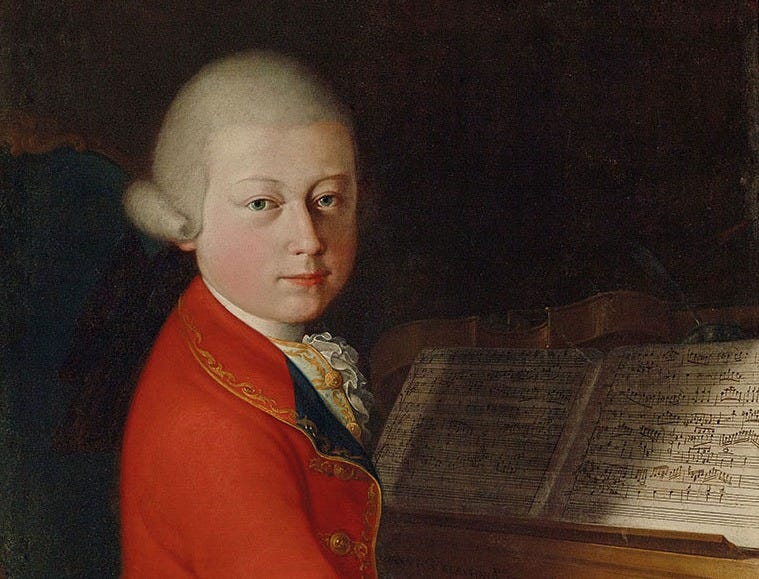
One consequence of the podcast boom is that I listen to music a lot less than I used to. Even after my favorite podcast ended last year, I still subscribe to enough shows that there’s almost always something new in the queue. As a result, my brain has become so accustomed to consuming conversations — and taking in information — that shifting my attention to music has largely fallen by the wayside.
So what was I doing on a recent Tuesday afternoon blasting Mozart, of all people, in my apartment? I will get to that.
But first, some news.
It’s been 10 months since I last wrote in this space, and I’ve had a few life changes during that time. Most notably, I sold my house in New Haven last month and moved to Long Island City in Queens, New York, directly across the East River from Midtown Manhattan.
Here I’ve joined Lady Jay in a new apartment as we embark on the next stage of our lives with many exciting and fun adventures to come.
Leaving New Haven was not easy. The city of my birth and youth was a place of great comfort to me after I moved there in August 2020. It offered refuge during the pandemic. It helped me reinvent myself after I lost my job in September 2022. And it connected me — or in some cases reconnected me — with treasured friends.
I loved being part of the community there and will miss it. But the good news is: I haven’t gone far. And with family and now more friends there to see (not to mention a very helpful therapist!), I will certainly be back.
In the meantime, I’m readjusting to the New York City rhythm of life. I’ve left the city three times now— once for California, twice for Connecticut — and I keep finding my way back, a changed person revisiting an ever-evolving city.
If only the Mets — now a mere 25 minutes from me on the 7 train — would use my return as inspiration for a string of stirring wins, everything would be great. Alas.
But referring to the cellar-dwelling Mets allows me to segue from the ridiculous to the sublime.
Returning to New York has invigorated my desire to seek out and write about culture again in this newsletter.
So why not start out with some highbrow shit?
I’ve gone down a Mozart rabbit hole this week, initially inspired by an ad in the New York Times for a new exhibition at the Morgan Library & Museum called Wolfgang Amadeus Mozart: Treasures from the Mozarteum Foundation of Salzburg.
When I saw the ad, I noted it on my list of potential museums to visit. Then when I discovered that a show I work on, CBS Sunday Morning, was doing a story on the exhibition, I decided to find my way there before it closes on May 31.
Mozart’s music bears some wonderful feelings of nostalgia for me, particularly around his Clarinet Concerto in A major. As a child clarinetist, I tackled the second movement, following in the footsteps of my brother Jeff, who had already performed the entire concerto as a high schooler. Though I stopped playing clarinet at 13, I can still remember every note of that piece.
One of my first live concert memories is seeing world-renowned clarinetist Richard Stoltzman perform the concerto with my parents at Woolsey Hall in New Haven. I was probably 10 years old, and it left a favorable impression (unlike the uncomfortable wooden pews at Woolsey).
As a teenager, watching the Academy Award-winning film Amadeus (1984) was an awe-inspiring experience, providing a somewhat fictionalized framing of Mozart’s life. (Upon rewatch this week, Amadeus doesn’t hold up quite as well as I’d hoped! But still worth a watch if you haven’t seen it.)
Born in Salzburg, Austria, in 1756, Mozart was a child prodigy. Under the tutelage of his father Leopold — a musician himself and “stage father” if there ever was one — Mozart began composing at age 5 and was performing for European royalty by age 6.
He would go on to pen more than 600 pieces, including symphonies, operas, chamber music, and choral works that in many ways came to define the Classical period of music. Some original versions of those pieces are on display at the Morgan exhibition, as are letters and other ephemera that effectively tell the story of Mozart’s life.
The showstopper is the clavichord — including ink stains from Mozart’s pen — on which he composed The Magic Flute and his Requiem in D minor, among other late masterpieces.
Mozart’s colorful life was tragically short — he died at age 35 in 1791. The cause of his death remains a subject of conjecture. The most hyperbolic suggestion (put forth in the film Amadeus) is that he was killed out of jealousy by his supposed rival, the Italian composer Antonio Salieri. As the exhibition explains, the truth is almost certainly more mundane, and with medicine at the time being what it was, we’ll probably never know what ailment ultimately caused his demise.
Of course, there is also music at the Morgan. The exhibition offers a sitting area where visitors are encouraged to listen and watch as a screen displays performances of Mozart pieces from around the world.
Aside from the familiarity and nostalgia his music stirs in me, I find that his compositions are tinged with magic. Yes, they can require technical virtuosity, but they are also often witty, joyous, and accessible to the modern ear — if you’re willing to give your attention.
Congratulations on your move. So glad you’re back online here. I enjoy your musings.
I miss our conversations over the years. As I get older and we celebrate our 70th year in business, I’ve been very nostalgic and reminiscent about my family business story. You’ll be happy to know that I have gone down the writing rabbit hole. I am putting together “Confessions of a Dry Cleaner” (I’m not sure if it’s a book or a collection of short stories) The through line is the store’s counter, and the relationships built and stories that start right there. The idea has been in the back of my mind for 10 or 12 years, and with AI helping me organize my notes, it has become the start to a book
Congrats on the move! Hopefully the Mets will turn things around in the next few (fill in the blank time period)...